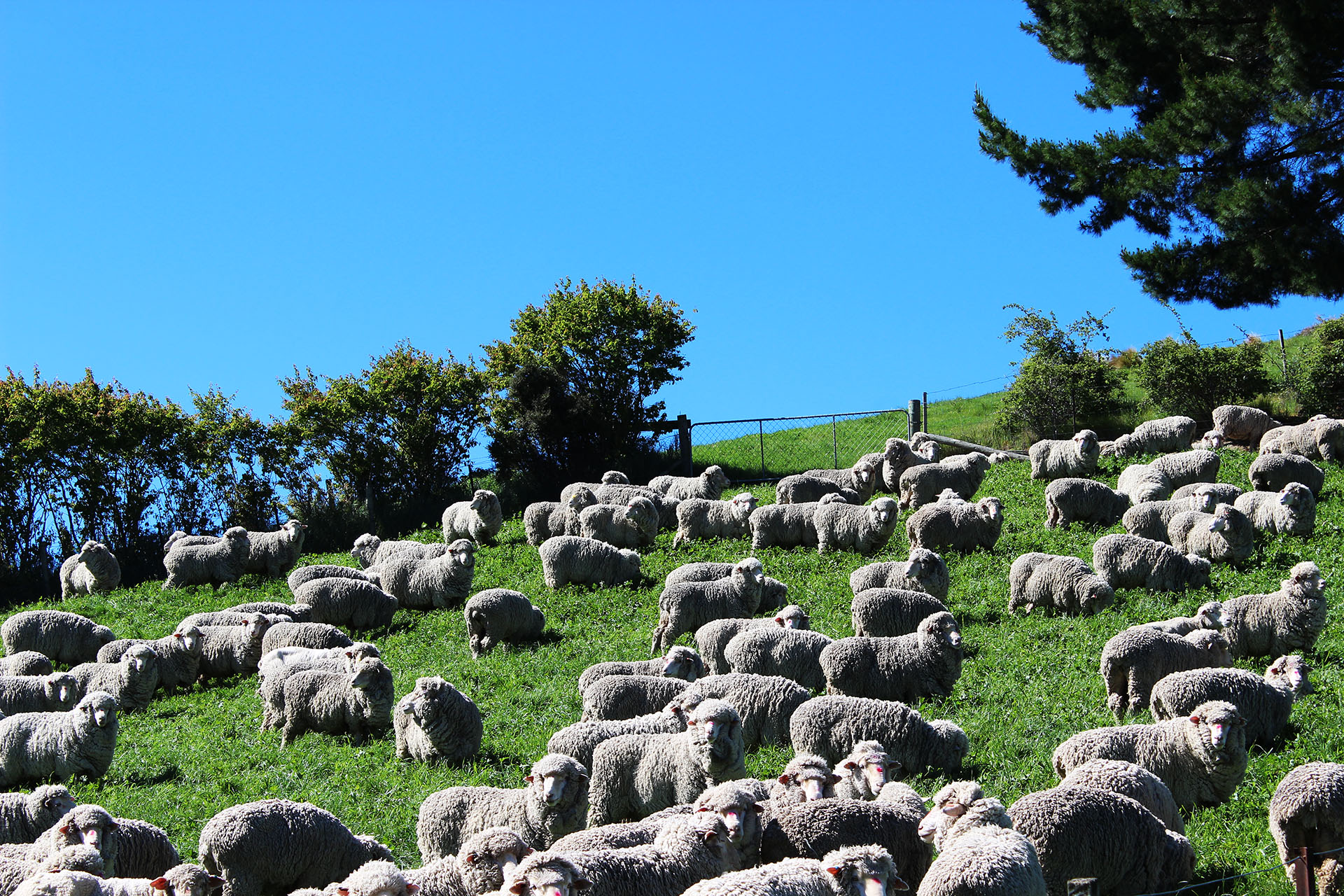
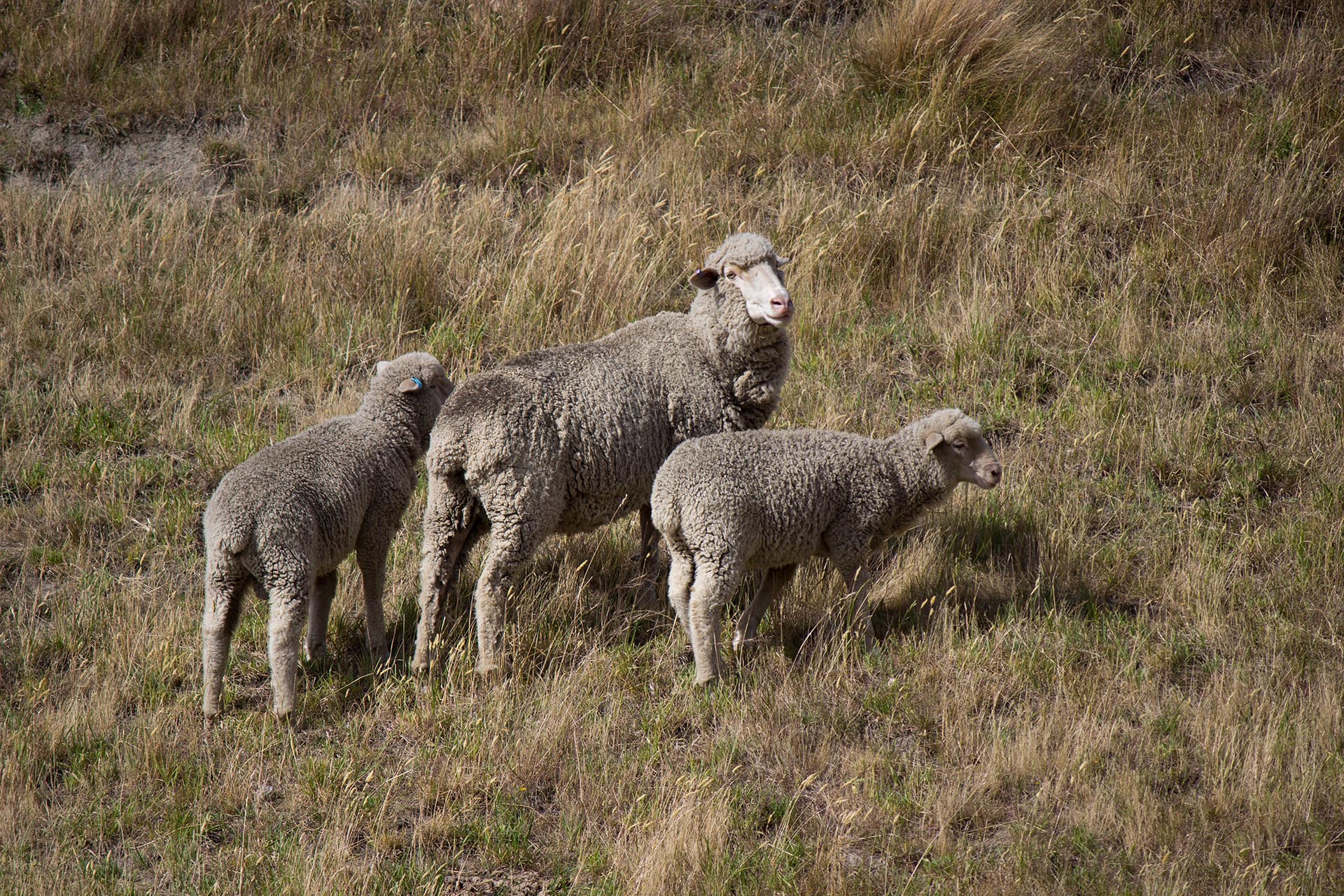
Our ongoing aim is to breed a fast growing, fine/medium merino with good fertility coupled with high survival. The sheep will be polled, plain bodied and clean on the points. The wool must be ‘fit for purpose’ and suited to our environment with long staple, good lock and clearly defined crimp. Resistance to footrot and internal parasites are also key components of our breeding program. Since the winter of 2016 we have annually measured individual worm egg counts in our ram hoggets. While resilence of a sheep to worm burden is a valuable trait, if we want to reduce the number of worm eggs on our pasture, genetic resistance will play an increasingly important role.
Since the winter of 2018 we have challenged ram hoggets with foot rot and scored their feet in order to generate breeding values.
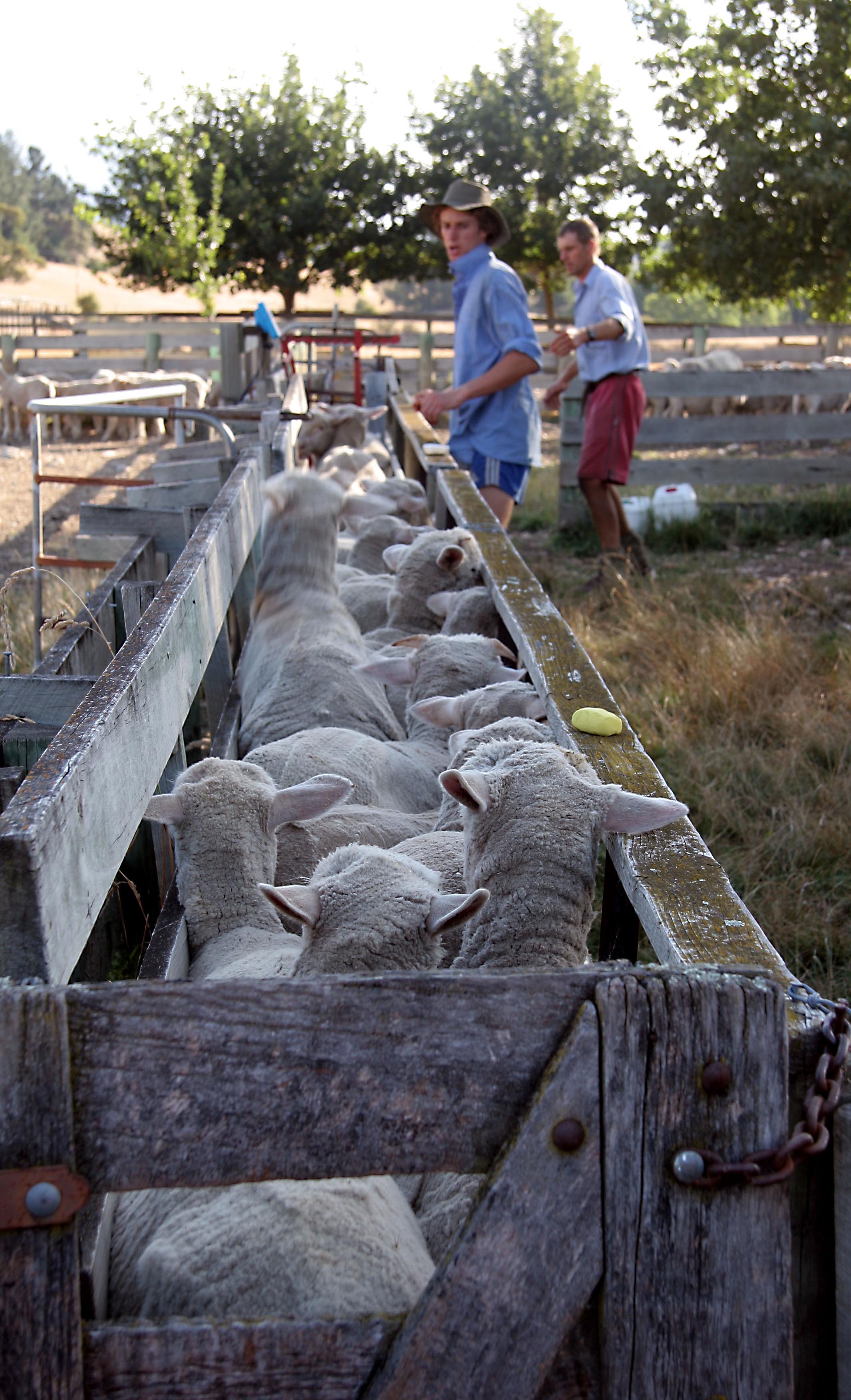
The significant benefits of increasing eye muscle and fat have been recognised and accordingly all retained male and female progeny are measured.
There is an extensive measuring and recording system which generates breeding values through Merino Select. The resultant EBVs are a valuable aid when we visually class our sheep. They significantly remove environmental effects and carefully using them should help to accelerate genetic gain in the flock.
Regular introductions of benchmarked outside genetics help boost our progress and validate our EBVs.
At present, Mark Ferguson and Will Gibson of
neXten Agri assist and advise us on selection within the stud and the sourcing of outside genetics.
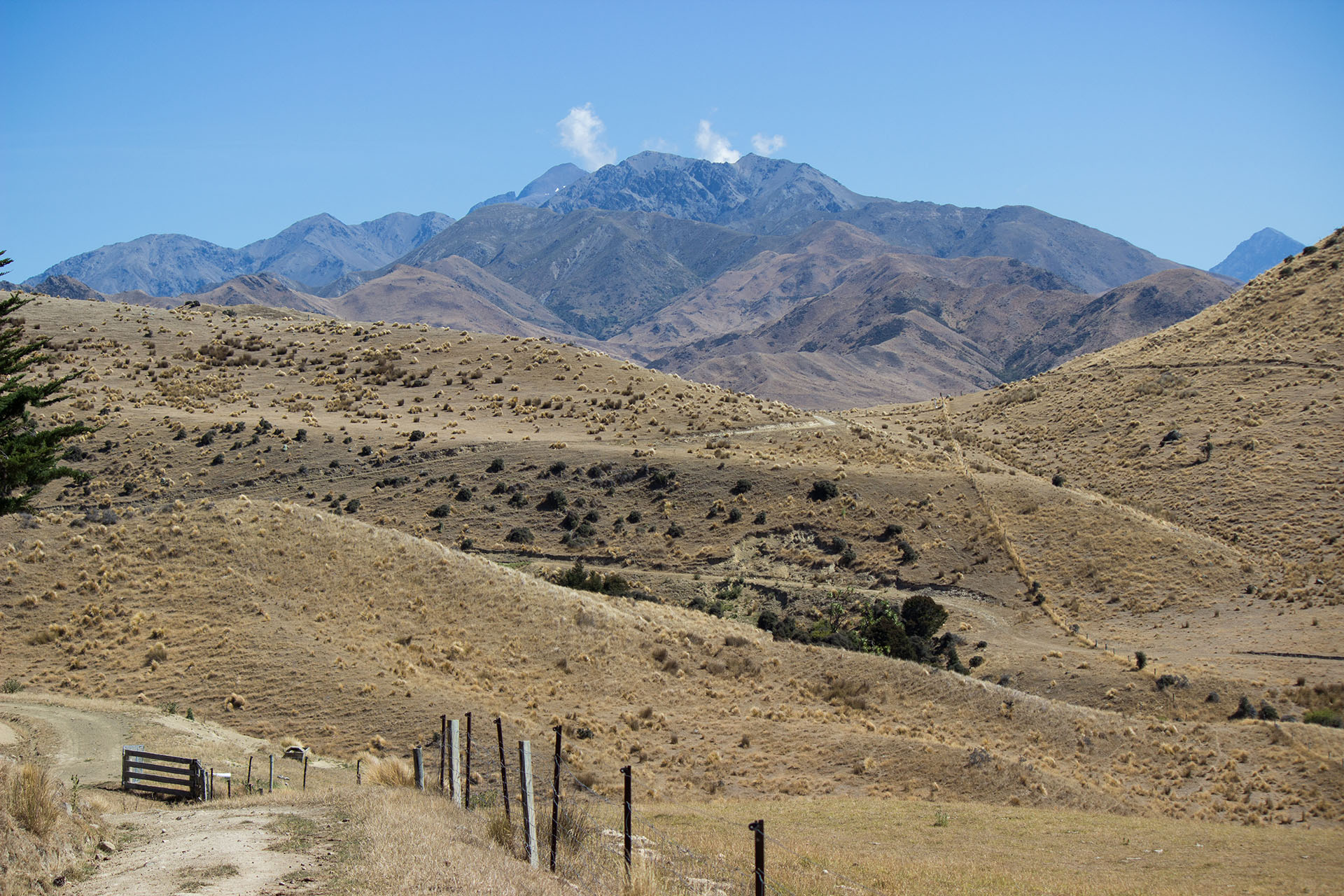
We are focused on breeding a merino that will thrive in a more challenging environment. We believe that there is an optimum level for productivity traits,based on environmental factors, that will vary from property to property. However while acknowledging that there are negative correlations between animal health and productivity traits, we are convinced that carefully improving genetics for animal health will help ensure that production potential can be realised while reducing chemical intervention.
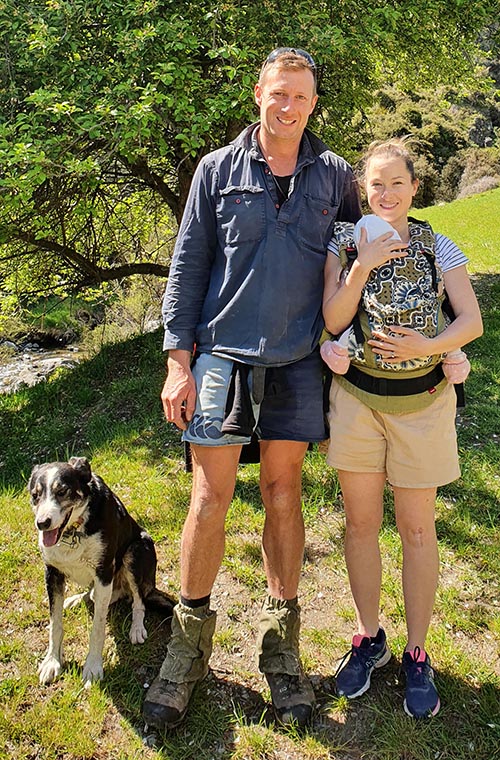
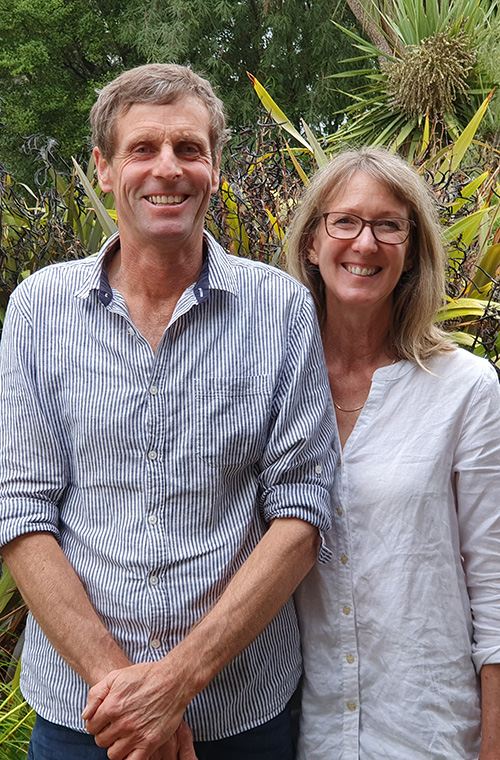
Simon and Lynda, Tom and Claudia